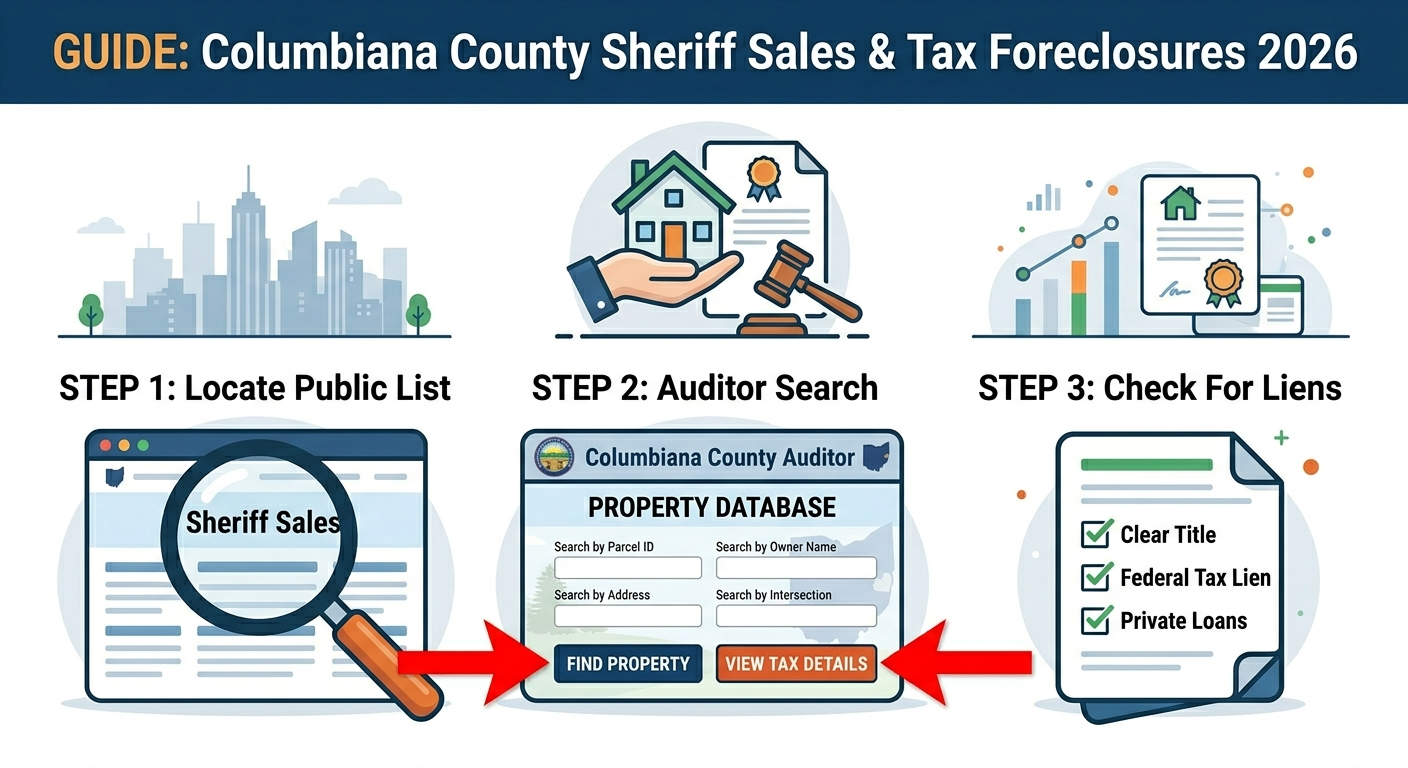
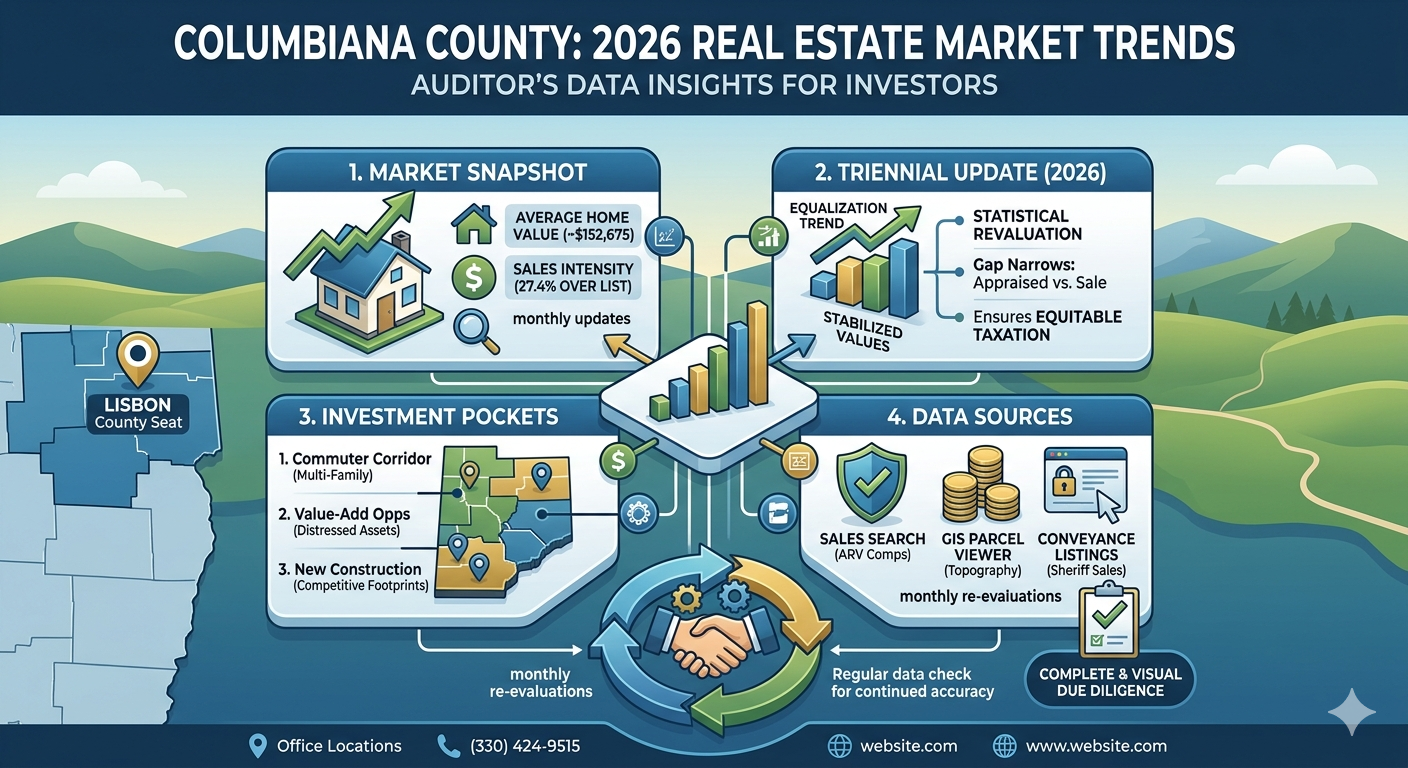
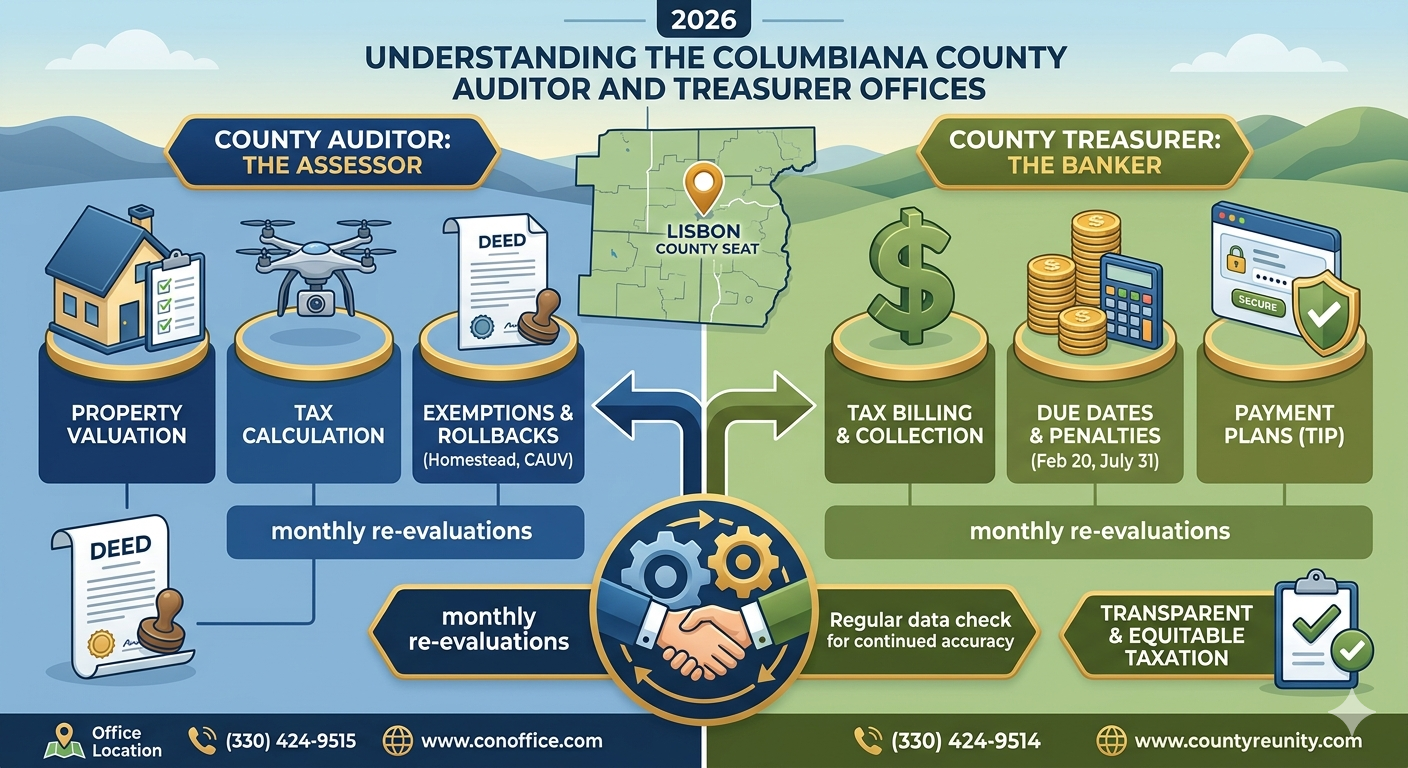
Navigating the complexities of the real estate market requires access to transparent and reliable data. Understanding the Columbiana County property sale history is essential for conducting thorough due diligence, whether for investment analysis or personal record-keeping. By utilizing the official Columbiana County Auditor property search portal, users can efficiently retrieve comprehensive property records and stay informed on recent property sales in Columbiana County, OH. For a more detailed spatial and legal analysis, the Columbiana County GIS parcel viewer and the Columbiana County recorder search serve as indispensable tools for verifying deed records and ownership chains. This professional guide provides the necessary framework for a successful Columbiana County parcel number lookup, ensuring you can master Ohio property sale history online with precision and ease.
Step 1: Visit the Columbiana County Auditor’s Website
Start your search on the official Columbiana County Auditor’s Office website:
Step 2: Search for Property Records
You can locate a property using any of the following options:
- Parcel Number (PPN – Permanent Parcel Number)
- Owner’s Name
- Property Address
The online search tool is simple to use and allows quick access to detailed property records.
Step 3: Review Property Sale History and Ownership Details
After selecting a property, the summary page typically displays:
- Last sale date
- Last sale price
- Current owner information
- Property details (square footage, lot size, bedrooms, etc.)
To see older transactions, open the Sales History, Transfer History, or Deed History section. This area lists all recorded transfers, including dates, sale amounts, and grantor/grantee names.
Step 4: Understand Property Transfer Types
Not all property transfers represent true market value. Columbiana County records usually indicate the transfer type:
Arm’s-Length Sale
A transaction between unrelated parties at fair market value. These sales are most useful for pricing and market analysis.
Non-Arm’s-Length Sale
Includes family transfers, gifts, foreclosures, and other related-party transactions that may not reflect actual market value.
Reviewing the deed type such as Warranty Deed or Quitclaim Deed helps clarify the nature of the transaction.
Step 5: Verify Records with the County Recorder’s Office
For legal verification or due diligence, cross-check sale information with the Columbiana County Recorder’s Office, which maintains official deed documents. This step is highly recommended for investors, attorneys, and title research.
Step 6: Print or Download Property Records
Most property pages allow users to print or export records. This feature is useful for documentation, professional reports, or future reference.
Example of Columbiana County Property Sale History
| Owner Name | Transfer Date | Sale Price | Transfer Type |
|---|---|---|---|
| James R. Miller | 11/05/2023 | $215,000 | Warranty Deed |
| Susan L. Davis | 06/18/2019 | $180,000 | Arm’s-Length Sale |
| Robert K. Wilson | 09/12/2015 | $155,500 | Quitclaim Deed |
Why Checking Property Sale History Is Important
- Buyers & Sellers: Determine fair market value
- Real Estate Investors: Identify pricing trends and ROI potential
- Legal Purposes: Confirm ownership chain and transfer legitimacy
- Property Research: Understand a property’s background
Tips for Accurate Property Research
- Always rely on official county websites for accurate data
- Contact the Auditor or Recorder’s Office if inconsistencies appear
- Be cautious when analyzing non-arm’s-length transactions
Conclusion
Accessing property sale history in Columbiana County is a straightforward process when using official county resources. Whether for real estate transactions, investment analysis, or general research, these records offer valuable insights into property ownership and market trends. For the most accurate results, always verify information through county offices when necessary.
FAQs
Q1: How can I find a parcel number in Columbiana County?
You can locate a parcel number by searching via address or owner name on the Auditor’s website, or by contacting the Auditor’s Office directly.
Q2: Are historical sale records available online?
Yes, many historical records are accessible online. However, older transactions may require an in-person visit to county offices.
Q3: What is the difference between Auditor and Recorder records?
The Auditor manages property valuation and sales data for tax purposes, while the Recorder maintains official legal documents such as deeds.
Q4: Is there a cost to access property records?
Online access is generally free. Fees may apply for certified copies or official documents.
Q5: How frequently are records updated?
Sale data is updated regularly, typically soon after a transfer is officially recorded.